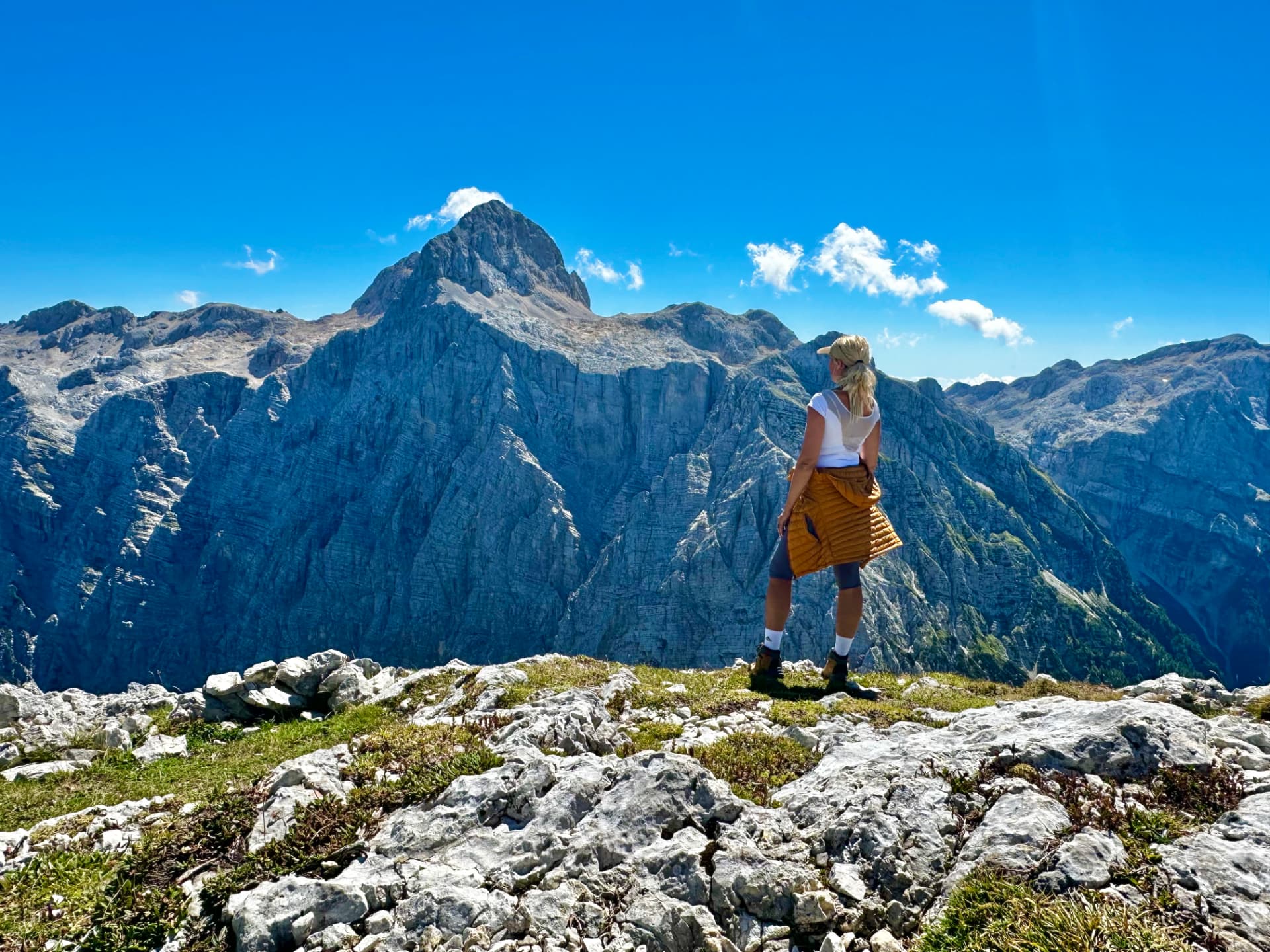
By Klara, founder of Amazing Slovenia, local guide & photographer · · ~10 min read
Contents
- 1. You need an e-vignette for motorways
- 2. The currency is the euro
- 3. Tap water is drinkable
- 4. Mountain weather changes fast
- 5. Embrace mountain hut culture
- 6. Sunday is for the hills
- 7. Distances are short, roads are winding
- 8. Drones have rules
- 9. Tipping isn't required, but appreciated
- 10. Slovenians love to help
Foreigners write many lovely things about Slovenia: the emerald rivers, the fairytale lakes, the fact that you can have breakfast in the Alps and dinner by the sea. All of it is true. But some things only a local can tell you: the small practical details that make the difference between a good trip and a truly relaxed one.
I've guided guests from all over the world through my country, and these are the ten things I share with every single one of them.
Quick facts
- Currency: euro (€)
- Language: Slovenian; English widely spoken
- Emergency number: 112 (ambulance, fire, mountain rescue)
- Police: 113
- Power sockets: type C/F, 230 V
- Time zone: CET (UTC+1), summer CEST (UTC+2)
1. You need an e-vignette for motorways
If you drive on Slovenian motorways and expressways, you need an electronic vignette (e-vinjeta). There's no sticker anymore: the vignette is linked to your licence plate, so there's nothing to put on your windscreen.
Buy it on the official DARS website (evinjeta.dars.si) before you get on the motorway, not after. Entering a motorway without a valid vignette can mean a fine of several hundred euros, and cameras check plates automatically.
2026 prices for cars (up to 3.5 t):
- Weekly: €16
- Monthly: €32
- Annual: €117.50
Motorcycles pay less (€8 for a week), and taller vans and campers over 1.3 m at the front axle pay more.
2. The currency is the euro
Slovenia uses the euro. Cards (Visa, Mastercard, contactless) are accepted almost everywhere: supermarkets, cafés, petrol stations, most restaurants and museums.
But always carry some cash. Many mountain huts, small village inns, tourist farms (turistične kmetije), farmers' markets and roadside honey or cheese stands still prefer or only accept cash. ATMs (bankomat) are easy to find in towns, but not in the mountains.
3. Tap water is drinkable
Slovenian tap water is excellent, and much of it comes from mountain springs and underground sources. Slovenia was even one of the first countries in the world to write the right to drinking water into its constitution.
Bring a reusable bottle and refill it from taps and public fountains, which you'll find in most towns and all around Ljubljana. In restaurants, you can ask for a glass or jug of tap water (voda iz pipe).
4. Mountain weather changes fast
A sunny morning in the valley can turn into a cold, wet afternoon on the ridge. Even in July and August, temperatures at 2,000 m can drop close to freezing, and summer thunderstorms often build up in the early afternoon.
What to pack for a mountain day:
- A warm layer (fleece or light down jacket)
- A waterproof rain jacket
- Proper hiking shoes with good grip (no sneakers on rocky trails)
- Sun protection: hat, sunglasses, sunscreen
- Water and snacks
- A charged phone
Do as the locals do: start early (ideally by 7 or 8 a.m.) and plan to be off exposed ridges and summits by early afternoon.
5. Embrace mountain hut culture
Mountain huts (planinske koče) are the heart of the Slovenian mountains. Most are run by local alpine clubs, they're simple and welcoming, and the food tastes twice as good after a climb.
What to try:
- Jota: a hearty stew of sauerkraut, beans and potatoes
- Ričet: barley stew, often with smoked meat
- Štruklji: rolled dumplings, sweet or savoury (try them with cottage cheese or walnuts)
- Borovničke: a small shot of blueberry schnapps, if you're not driving
- Hut tea (čaj), often served with lemon
Most high-mountain huts open from roughly June to September; lower huts are often open all year. If you want to sleep in a hut during peak season, book ahead.
And on the trail, greet everyone you pass with a friendly "dober dan" (good day) or a simple "živijo". It's just how things are done here, and you'll always get a smile back.
6. Sunday is for the hills
Slovenians love their mountains, and on a sunny weekend it can feel like the whole country is on the trails. Popular spots like Lake Bled, Vintgar Gorge, Velika Planina and Šmarna gora get busy, especially on Saturday and Sunday mornings.
At the same time, most shops are closed on Sundays and public holidays. Petrol station shops and a few smaller stores stay open, but big supermarkets don't.
Plan ahead:
- Do your grocery shopping on Saturday.
- Choose quieter trails or visit popular places on weekdays.
- Check public holidays before your trip (for example 25 June, 15 August and 1 November).
7. Distances are short, roads are winding
Slovenia is small. You can drive from the Alps to the sea in about two hours. On the map, everything looks close. But mountain passes, valley roads and village routes take longer than you think, and you'll want to stop for the views anyway.
A few examples: the Vršič Pass has 50 hairpin bends; the road through the Soča Valley is beautiful but slow; and parking at popular spots like Bled or Bohinj can take time in high season.
My advice: don't pack too much into one day. Two or three highlights, enjoyed properly, beat six rushed ones. Slovenia is best experienced slowly.
8. Drones have rules
Slovenia is incredibly photogenic, and I understand the urge to see it from above. But drones are restricted in Triglav National Park, many other protected nature areas, near airports, and over towns and crowds.
Slovenia follows EU drone regulations, which means registration and a basic online certificate for most drones. On top of that, protected areas have their own rules, and flying in Triglav National Park without special permission is not allowed.
Check the current rules before you fly. Fines are real, and the wildlife (and other hikers) will thank you.
9. Tipping isn't required, but appreciated
Service is included in prices, so tipping isn't expected the way it is in some countries. Still, it's a nice gesture:
- Restaurants: round up the bill or leave around 10% for good service.
- Cafés and bars: round up to the nearest euro.
- Tour guides and drivers: a tip is appreciated if you enjoyed the experience.
10. Slovenians love to help
Most people speak English, especially the younger generation, and many also speak German, Italian or Croatian. Don't hesitate to ask for directions or a recommendation.
Slovenians are proud of their country, and when you show genuine interest, you'll often walk away with a tip for a hidden spot that isn't in any guidebook: a quiet waterfall, a family-run inn, or a viewpoint only locals know.
A few words that open doors:
- Dober dan: Good day
- Hvala: Thank you
- Prosim: Please / You're welcome
- Na zdravje: Cheers!
- Nasvidenje: Goodbye
Try even one of them, and watch the smiles appear.
Travel Slovenia like a local
Slovenia rewards travellers who slow down, stay curious and step a little off the beaten path. With these ten tips in your pocket, you're already ahead of most visitors.
And if you'd like someone to take care of the details for you (the timing, the routes, the mountain huts worth the climb, and the places only locals know), that's exactly what we do at Amazing Slovenia. We design private, tailor-made journeys for travellers who want to experience Slovenia beyond the postcards.
Dobrodošli, welcome. We can't wait to show you around.
Useful links
- E-vignette (official): evinjeta.dars.si
- Weather forecast: meteo.arso.gov.si
- Road conditions: promet.si
- Official tourism information: slovenia.info
- Triglav National Park: tnp.si
You might also like
21 May 2026 · 9 min read
Slovenia in 7 Days: The Perfect First-Time Itinerary
Read →Ready to experience Slovenia like a local?
Plan your trip with us →