By Klara, founder of Amazing Slovenia, local guide & photographer · · ~12 min read
Contents
- Ljubljana: the green heart
- The Julian Alps: lakes, peaks and emerald rivers
- The Kamnik-Savinja Alps: alpine calm
- The Karst and the coast: caves, wine and the sea
- Eastern Slovenia: wine hills, old towns and warm hospitality
- The south-east: Slovenia's best-kept secret
- Bonus: Lake Cerknica, the lake that disappears
- How much time do you need?
- Best time to visit
- Getting around
- Slovenia, your way
Slovenia is the kind of country that surprises people. On the map, it's tiny. In real life, it holds the Alps, the Mediterranean, mysterious karst caves, wine hills and thermal springs, often less than two hours' drive from each other.
When guests ask me where they should go, my answer is always: "It depends on what makes your heart beat faster." So instead of one long list, I've organised my favourite places by region. Pick the ones that speak to you, and don't try to see them all at once. Slovenia is best enjoyed slowly.
Looking for my personal favourites and the best time to visit them? Read the most beautiful places in Slovenia – a local's honest picks.
Ljubljana: the green heart
Ljubljana
Every trip to Slovenia passes through Ljubljana, and it deserves more than a quick stop. Our capital feels more like a relaxed, elegant small town than a big city: a car-free old centre, cafés spilling onto the banks of the Ljubljanica river, and a castle watching over it all. It was named European Green Capital in 2016, and you'll feel why the moment you arrive.
Much of the city's charm comes from the architect Jože Plečnik, whose bridges, market colonnades and public spaces are now on the UNESCO World Heritage List.
Don't miss:
- The Triple Bridge, Prešeren Square and a slow walk along the river
- The Central Market, especially on Saturday mornings
- Ljubljana Castle, reached on foot or by funicular
- Tivoli Park, the city's big green living room
- Open Kitchen (Odprta kuhna), a Friday street-food market in spring and summer
The Julian Alps: lakes, peaks and emerald rivers
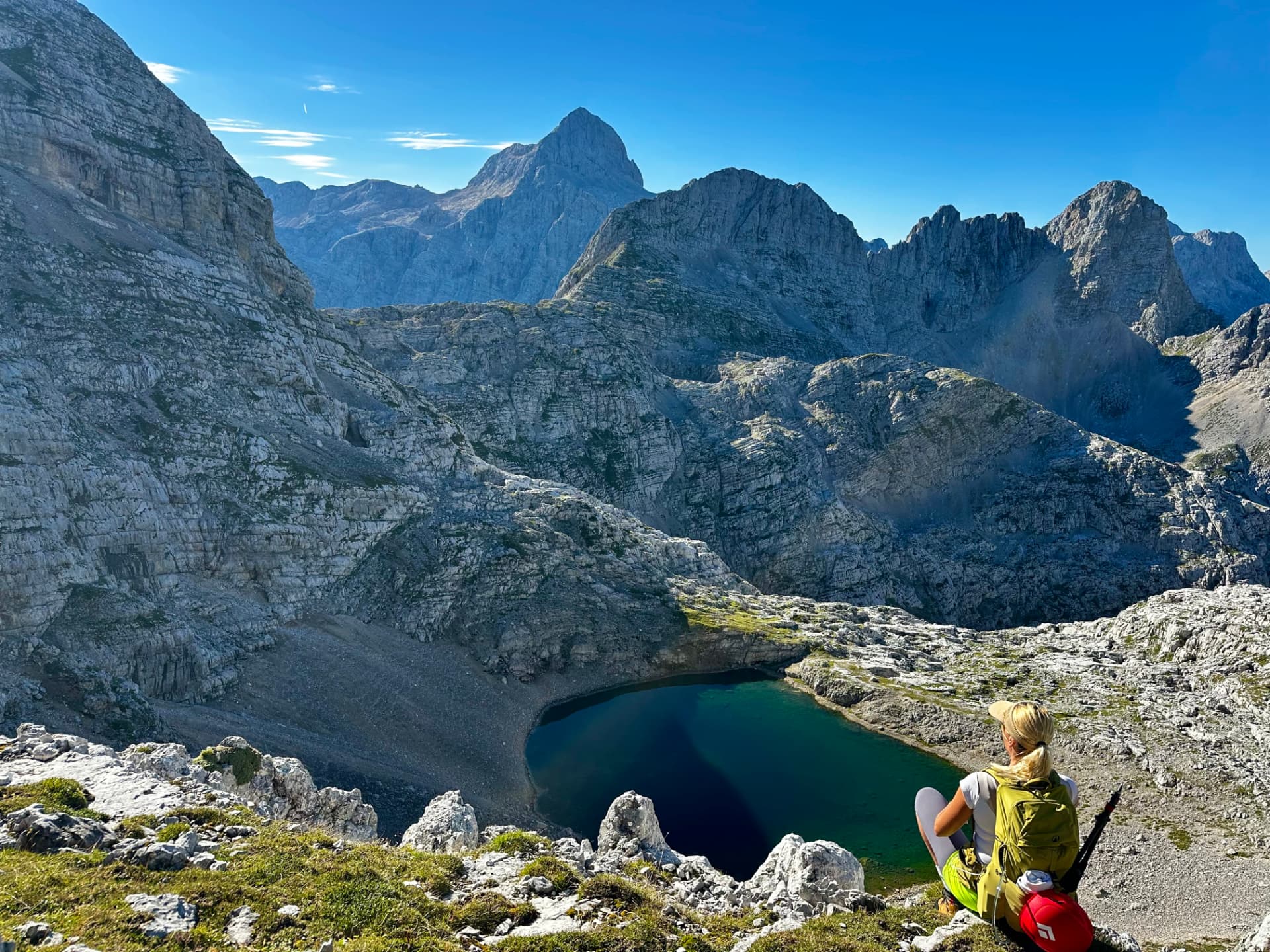
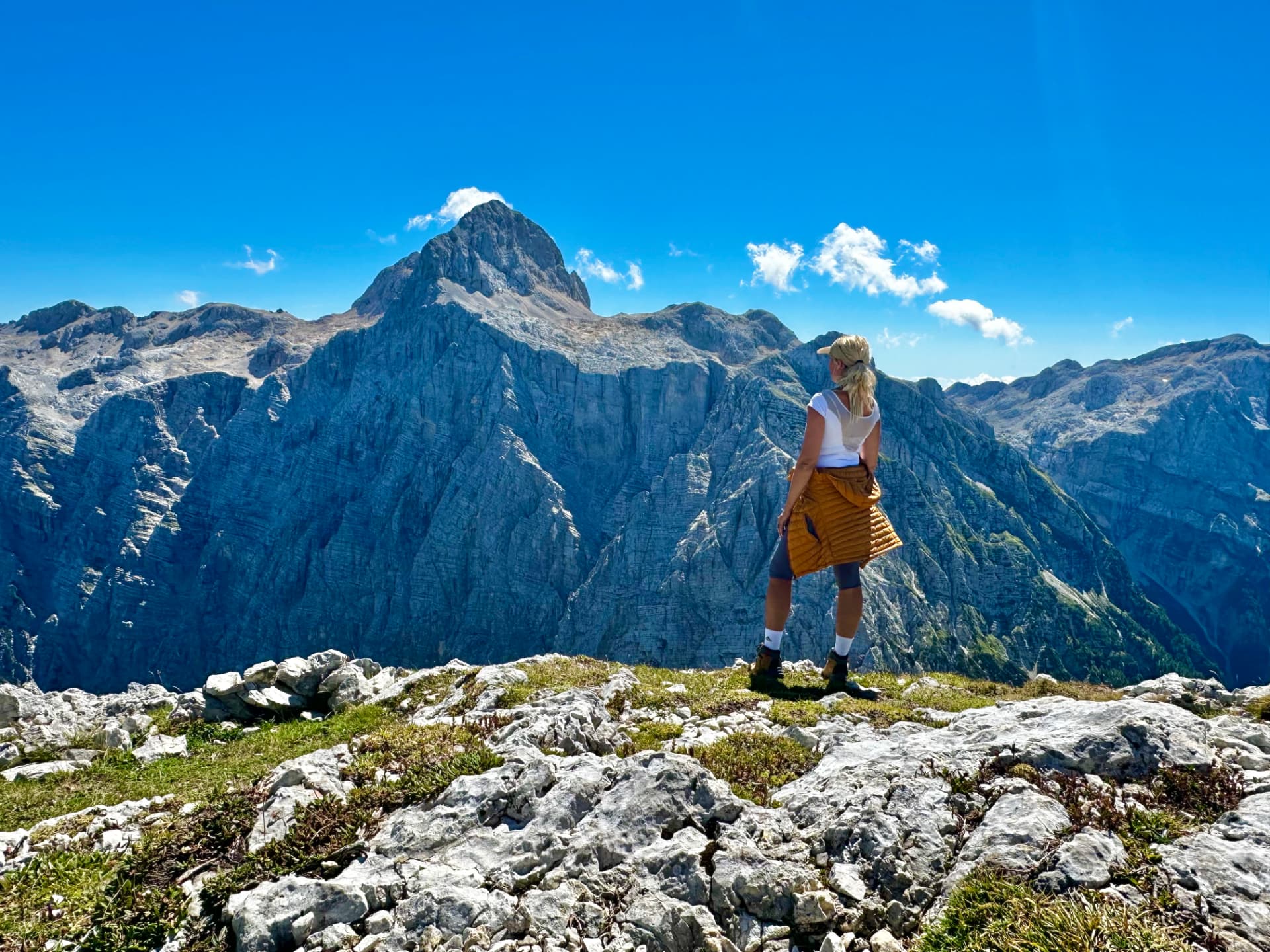
This is the Slovenia you've probably seen in photos, and it really does look like that. Much of the region lies within Triglav National Park, named after Triglav (2,864 m), the country's highest mountain and a national symbol.
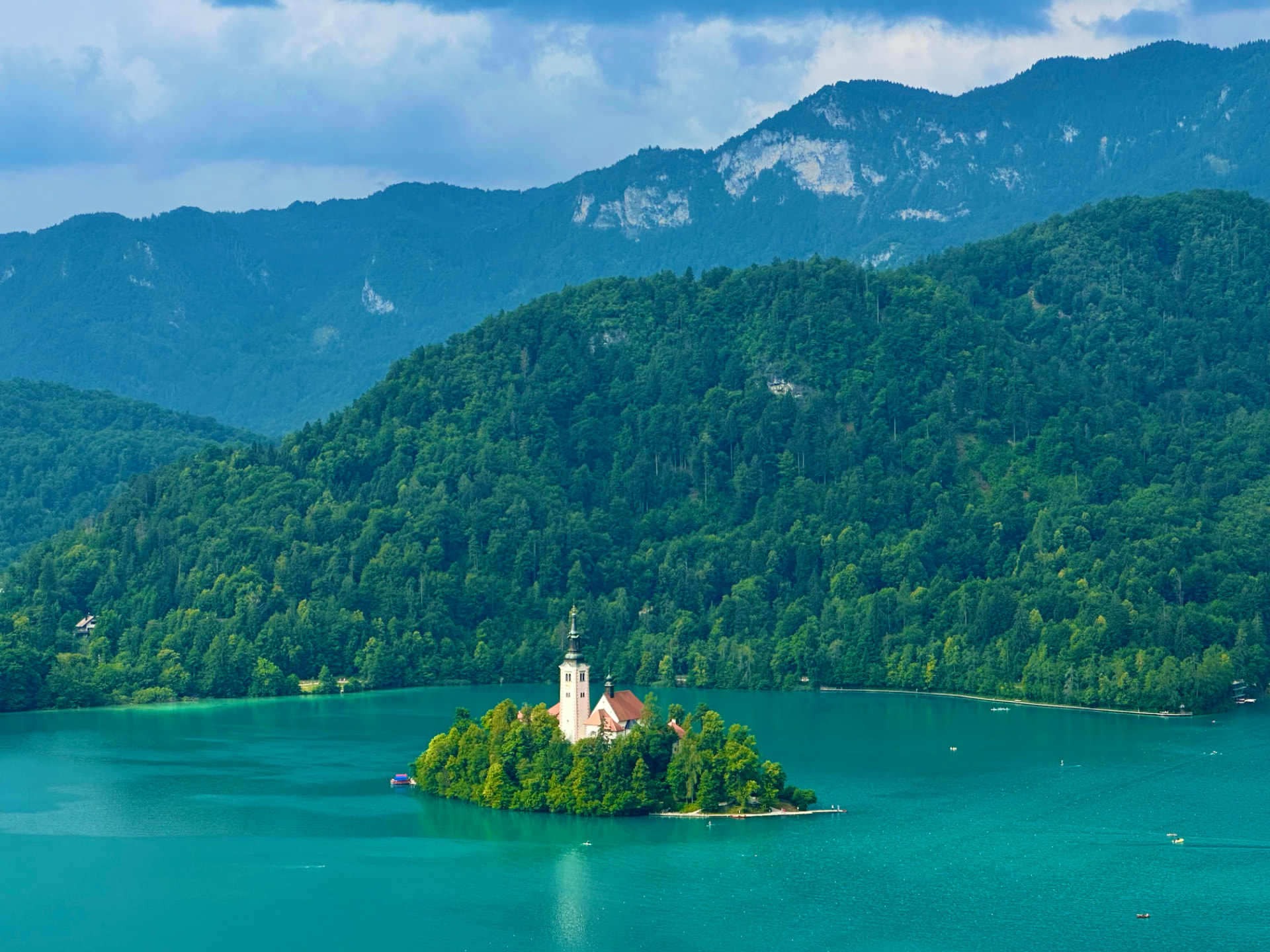
Lake Bled
Yes, it's famous, and yes, it's worth it. Take a traditional pletna boat to the island, ring the wishing bell in the little church, climb up to Bled Castle for the view, and finish with a slice of kremšnita, Bled's famous cream cake.
Lake Bohinj
Bled's bigger, wilder and quieter neighbour. Bohinj is where Slovenians go to swim, paddle, hike and simply breathe. Walk to the Savica waterfall, take the cable car up to Vogel for views over the lake and the Julian Alps, or explore the Mostnica Gorge.
Kranjska Gora and Planica
A mountain village at the foot of dramatic peaks, perfect as a base for hiking in summer and skiing in winter. Just nearby: the emerald springs of the Zelenci Nature Reserve, the calm Lake Jasna, and the valley of Planica, home of the giant ski-flying hills.
The Vršič Pass and the Soča Valley
Drive over the Vršič Pass, the highest road pass in Slovenia, with its 50 hairpin bends and the little wooden Russian Chapel, and descend into the Soča Valley. The Soča is one of the most beautiful rivers in Europe, with water so turquoise it looks unreal.
Don't miss:
- Rafting, kayaking or canyoning in Bovec
- The Great Soča Gorge and the Kozjak waterfall near Kobarid
- The Kobarid Museum, one of the best World War I museums in Europe
- Soča trout for dinner
The Kamnik-Savinja Alps: alpine calm
If the Julian Alps are the celebrities, the Kamnik-Savinja Alps are their quieter, equally beautiful siblings.
Velika Planina
A high mountain plateau dotted with wooden herdsmen's huts with pointed shingle roofs, one of the most unique landscapes in Slovenia. Take the cable car and chairlift from Kamniška Bistrica, walk across the pastures, and in summer taste fresh dairy products from the herdsmen, including trnič, a traditional decorated cheese.
Logar Valley
A glacial valley surrounded by steep mountain walls, with farms, meadows and the Rinka waterfall at its end. Combine it with the Solčava Panoramic Road for incredible views over the whole area.
The Karst and the coast: caves, wine and the sea
The word "karst" – used by geologists all over the world – comes from this very region, the Kras. Here, water has carved the limestone into caves, sinkholes and underground rivers, while above ground you'll find stone villages, red soil, strong wine and the Adriatic Sea.
Postojna Cave and Predjama Castle
Postojna Cave is the most visited cave in Slovenia, and for good reason. A small train takes you deep inside, then you continue on foot through halls full of stalactites and stalagmites. Just a short drive away, Predjama Castle is built right into the mouth of a cave in a vertical cliff: a real-life fairytale with a legendary knight's story to match.
Škocjan Caves
For many locals, including me, Škocjan is the more breathtaking of the two. On UNESCO's World Heritage List since 1986, it's home to one of the largest known underground canyons in the world. Crossing the bridge high above the roaring Reka river is an experience you won't forget.
Lipica and Štanjel
Lipica is the original home of the famous Lipizzaner horses, bred here since 1580. Nearby, the hilltop village of Štanjel is one of the most beautiful stone villages in Slovenia, with the lovely Ferrari Garden.
What to taste: Kras prosciutto (pršut), dried by the cold bora wind, and teran, a deep red wine made from grapes that grow on the region's red soil.
Piran and the Slovenian coast
Slovenia has less than 50 km of coastline, but it's full of charm. Piran, with its Venetian-style houses, narrow streets and elegant Tartini Square, is the jewel of the coast. Climb up to St. George's Church or the town walls for views over the red rooftops and the sea.
Don't miss:
- The Sečovlje Salt Pans, where salt is still harvested the traditional way
- The Strunjan Nature Reserve, with its cliffs, lagoon and quiet beaches
- Izola, a relaxed fishing town with great seafood
- Koper's old town, Slovenia's largest coastal town
Eastern Slovenia: wine hills, old towns and warm hospitality
Most international visitors never make it to the east, which is a shame, because this is where Slovenia is at its most generous: gentle hills covered in vineyards, thermal spas, historic towns and some of the country's best food.
Maribor
Slovenia's second-largest city sits on the Drava river, surrounded by wine hills and the green Pohorje mountains. In the old Lent district grows the Old Vine, more than 400 years old and recognised as the oldest vine in the world that still bears grapes.
Ptuj
Slovenia's oldest town, with Roman roots, a castle above the Drava and a beautiful medieval centre. Ptuj is also famous for Kurentovanje, its carnival, where the kurenti – shaggy figures with bells and horns – chase away winter. Their door-to-door rounds are recognised by UNESCO as intangible cultural heritage.
Jeruzalem wine hills and Prekmurje
The rolling vineyards around Jeruzalem are some of the most beautiful wine landscapes in Central Europe. Further east, flat and peaceful Prekmurje is home to storks, thermal spas, Plečnik's remarkable church in Bogojina and prekmurska gibanica, a layered cake you have to try at least once.
Celje
A historic town with the Old Castle of Celje, once the seat of the powerful Counts of Celje, rising on a hill above the Savinja river.
The south-east: Slovenia's best-kept secret
This is my home region, so I've given it its own article. The warm Kolpa river, Novo mesto and its wine hills, the island town of Kostanjevica na Krki and more are all in my guide to Slovenia's hidden gems.
Also worth knowing: the vast forests of Kočevsko are among the wildest in Europe and home to brown bears, wolves and lynx. With an experienced local guide, you can even join a bear-watching tour.
Bonus: Lake Cerknica, the lake that disappears
Not far from Postojna lies one of Slovenia's strangest natural wonders. Lake Cerknica is an intermittent lake: for part of the year it's one of the largest lakes in the country, and when the water drains away through the karst underground, it turns into meadows. If you love nature's surprises, it's well worth a stop.
How much time do you need?
| Trip length | What I recommend |
|---|---|
| 3 days | Ljubljana, Lake Bled and Lake Bohinj |
| 5 days | Add the Soča Valley and the Karst caves |
| 7 days | Add Piran and the coast, plus Velika Planina or Logar Valley |
| 10 days or more | Add eastern Slovenia (Maribor, Ptuj, wine hills) and the south-east hidden gems |
Remember: distances are short, but roads can be slow and winding. It's always better to see fewer places properly than to rush.
Want a day-by-day plan? See my 7-day Slovenia itinerary.
Best time to visit
Spring
April–May
Green valleys, waterfalls at their fullest, fewer crowds. Perfect for Ljubljana, the Karst and the coast. High mountain trails may still have snow.
Summer
June–August
Swimming in lakes and rivers, hiking in the high mountains and mountain huts open. The most popular season, so book ahead and start your days early.
Autumn
September–October
My favourite season. Golden forests, grape harvest, warm days and quieter trails. Ideal for wine regions and hiking.
Winter
November–March
Skiing, cosy towns, Christmas markets in December and carnivals like Kurentovanje. Some mountain roads, including the Vršič Pass, are usually closed.
Getting around
The best way to explore Slovenia is by car. Many of the most beautiful places, especially in the mountains and countryside, are hard or impossible to reach by public transport. Buses connect most towns, and trains are scenic but slow and don't reach many of the natural highlights.
If you're driving, don't forget your e-vignette for the motorways. You'll find this and other practical advice in my 10 tips for visiting Slovenia.
Slovenia, your way
Whether you come for the mountains, the sea, the caves or the wine, Slovenia has a way of making every traveller feel at home. The trick is to choose what truly matters to you, and leave space for the unexpected.
If you'd like help putting it all together, that's exactly what we do at Amazing Slovenia. We design private, tailor-made journeys based on your interests and your pace, with local guides who know every corner of the country, from the famous lakes to the places most visitors never find.
Dobrodošli, welcome. Let's plan your Slovenia.
You might also like
Let's plan your Slovenia
Plan your Slovenia journey →